
While those tools are important, they’re only part of the picture.
In regulated environments, one of the most common reasons organizations struggle during audits and exams isn’t because their technology is weak—it’s because their documentation is incomplete, outdated, or inconsistent.
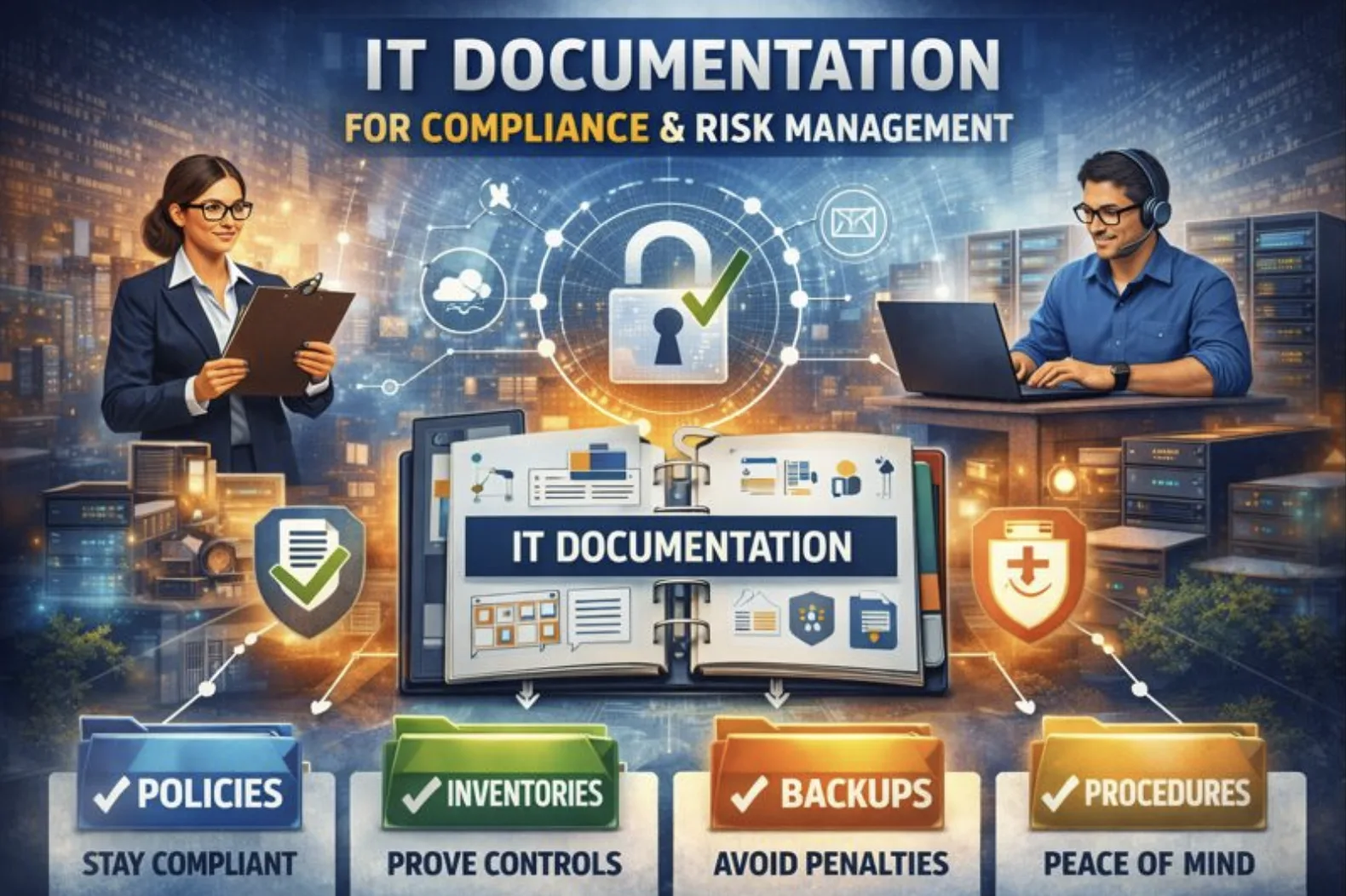
IT documentation is rarely exciting, but it plays a critical role in compliance, risk management, and operational resilience. In many cases, strong documentation is the difference between a smooth audit and a stressful one.
Let’s look at why documentation matters so much, what regulators expect to see, and how organizations can manage it without overwhelming internal teams.
Why Documentation Matters More Than Most Organizations Realize
Regulators and auditors don’t just evaluate what controls you have in place—they evaluate whether you can prove those controls exist and are being followed.
Documentation answers key questions such as:
- How are systems managed?
- How are risks identified and addressed?
- Who is responsible for what?
- How do you know controls are working?
Even strong security and IT practices lose value if they can’t be demonstrated with clear, consistent records.
This is why documentation is closely tied to the expectations we discussed in our previous post on what regulators and auditors expect from your IT.
The Most Common Documentation Gaps We See
Across banks, credit unions, healthcare organizations, and other regulated businesses, the same documentation challenges appear again and again.
1. Policies That Don’t Match Reality
Many organizations have written policies—but those policies:
- Haven’t been updated in years
- Don’t reflect current systems or processes
- Were created once and forgotten
Auditors quickly spot this mismatch.
Policies must reflect how IT and security are actually managed today, not how they were handled five years ago.
2. Missing or Outdated Asset Inventories
A simple question often causes trouble:
“Can you provide a list of your systems and devices?”
If asset inventories aren’t actively maintained, organizations struggle to answer confidently.
This creates downstream issues with:
- Patch management
- Access control
- Risk assessments
- Incident response
Break-fix IT environments are especially prone to this problem, as discussed in our February blog on outgrowing break-fix IT support.
3. Inconsistent Backup and Recovery Evidence
Many organizations have backups—but can’t show:
- Verification reports
- Testing records
- Documented recovery procedures
From an audit perspective, undocumented backups may as well not exist.
This ties directly to the downtime and recovery risks covered in our post on the hidden costs of downtime.
Not sure your backup documentation would hold up in an audit? Request a documentation gap review.
4. Tribal Knowledge Instead of Process
When IT knowledge lives only in someone’s head, it becomes a risk.
This often happens when:
- One person “just knows how things work”
- There’s no written procedure
- Staff turnover occurs
Regulators expect repeatable, documented processes—not reliance on individual memory.
What Types of IT Documentation Auditors Look For
While requirements vary by industry, most audits and exams review similar categories of documentation.
Core Documentation Areas Include:
- IT and security policies
(Access control, acceptable use, incident response, data protection) - Network and system documentation
(Diagrams, system descriptions, data flows) - Asset inventories
(Servers, workstations, applications, cloud systems) - Access and user management records
(Role definitions, onboarding/offboarding procedures) - Backup and recovery documentation
(Schedules, verification reports, recovery plans) - Patch and update processes
(How updates are tracked and applied) - Risk assessment and remediation records
This documentation supports—and is supported by—the proactive controls described in our February pillar on what managed IT services really include.
Why Documentation Is So Hard to Maintain Internally
Most organizations don’t struggle with documentation because they don’t care. They struggle because:
- Internal IT teams are stretched thin
- Documentation is time-consuming
- There’s no standard process
- Compliance requirements keep changing
Documentation often becomes a reactive exercise, rushed just before an audit instead of being maintained consistently.
That approach increases stress, risk, and the likelihood of findings.
How Managed IT Supports Documentation and Compliance
Managed IT services help regulated organizations move from reactive documentation to continuous readiness.
This typically includes:
- Standardized policies and templates
- Ongoing updates as systems change
- Centralized documentation storage
- Regular reviews aligned with audits and exams
- Clear ownership and accountability
Instead of scrambling for evidence, organizations can respond confidently when documentation is requested.
Want documentation that stays current instead of scrambling before audits? Talk to an IT compliance specialist.
Real-World Example
A healthcare organization had solid technical controls in place but struggled during audits due to inconsistent documentation. Policies hadn’t been updated to reflect new systems, and backup testing records were incomplete.
After engaging a managed IT partner, they implemented:
- Updated and aligned IT policies
- Regular documentation reviews
- Clear backup and recovery records
- Centralized access to audit evidence
Subsequent audits were significantly smoother, with fewer findings and less disruption to daily operations.
Frequently Asked Questions
Is documentation really as important as technical controls?
How often should IT documentation be reviewed?
Can managed IT create documentation for existing environments?
Does documentation help beyond audits?
Final Thought
IT documentation may not feel urgent—until it’s urgently needed.
In regulated environments, strong documentation isn’t just paperwork. It’s a core component of risk management, compliance, and operational stability.
When documentation is current, consistent, and well-managed, audits become far less disruptive and far more predictable.
0 Comments